 TCOT
TCOT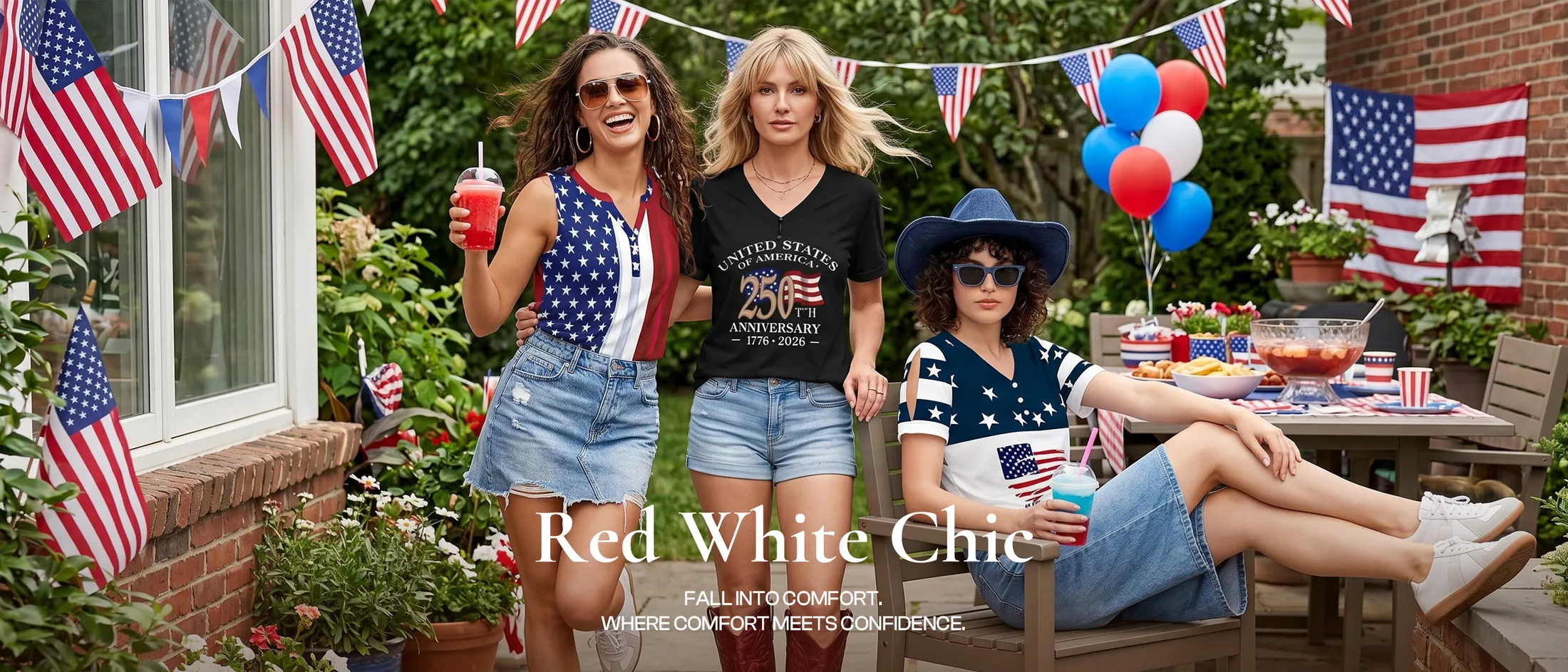
The label in the side seam is the most regulated part of a garment and the least read. Four lines on it are there because federal rules put them there, and each one answers a question worth asking before you buy.
This is general information about how these labelling rules work, taken from the agency that publishes them. It is not legal advice, and it is not a statement about any particular garment.
Three things the label has to carry
Most textile and wool products sold in the United States carry three pieces of information by law, and the Federal Trade Commission says so in one sentence.
“The Rules require that labels identify manufactured fibers using the fiber's generic names”
Fibre content. Country of origin. Who is responsible for the product. Care instructions come from a separate rule and are usually on the same label or the one below it.
None of that is marketing. It is the part of a garment that has to be true, which makes it the part worth reading first.
Fibre content, and why the order matters
Fibres are listed by generic name and by percentage of weight, in descending order. That order is the useful part. A top that reads 95% polyester, 5% spandex behaves like polyester with a little give. One that reads 60% cotton, 40% polyester behaves mostly like cotton and creases accordingly.
Generic names are set out in the rules rather than invented by brands. What a marketing page calls a signature blend has to appear on the label as the fibres it is made of. The label is the honest version of the same sentence.
| What the label says | How it behaves | Where it suits our range | The catch |
|---|---|---|---|
| Mostly cotton | Breathes, creases, softens with washing | Summer tops and tunics | Shrinks a little on a hot wash |
| Mostly polyester | Holds shape, dries fast, does not crease | Travel tops, activewear | Holds smell longer than cotton |
| Rayon or viscose | Drapes, feels cool, hangs beautifully | Blouses with movement | Weakest when wet, wash gently |
| Nylon shell with a coating | Sheds a shower, packs down small | Rain layers | Water resistant is not waterproof |
| Any blend with spandex | Stretches and recovers | Knits and leggings | Recovery fades with heat |
The rain shelf is where this matters most. A coated nylon shell and a soft-shell knit can look identical in a photograph and behave nothing alike in a shower. Both live on the TCOT rain and outerwear shelf, and the fibre line is the fastest way to tell them apart.
Country of origin
The rules require the label to name the country where the product was processed or manufactured. For an imported garment that is the country of origin as determined by customs, not the country of the brand and not the country of the fabric.
This is why two garments from the same label can carry different countries. The pattern, the fabric and the sewing can each sit in a different place, and the rule points at the last of them.
The care instruction is a promise
Care labelling is its own rule, and it puts a duty on the maker rather than on the wearer.
“The Care Labeling Rule requires manufacturers and importers to attach care instructions to clothing and some piece goods”
The important part is what sits behind the instruction. A maker needs a reasonable basis for every line, which means evidence rather than caution. Dryclean Only is not a way of avoiding responsibility for a garment that would wash perfectly well. It is a claim that washing would damage it.
Read a care label as an instruction and as a signal. A machine-washable knit at a low temperature is a knit somebody tested in a machine. A garment with a warning attached is a garment where somebody found the failure.
On the shelf
Knitwear that goes in the machine
Cardigans and pullovers from the range, all of them washable at a low temperature rather than dry clean only.
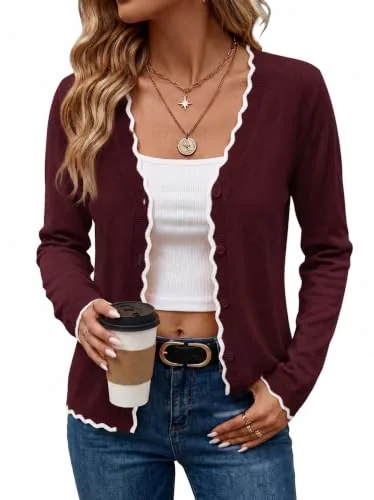
V Neck Button Down Cardigan Sweaters Long Sleeve Cardigans Wine

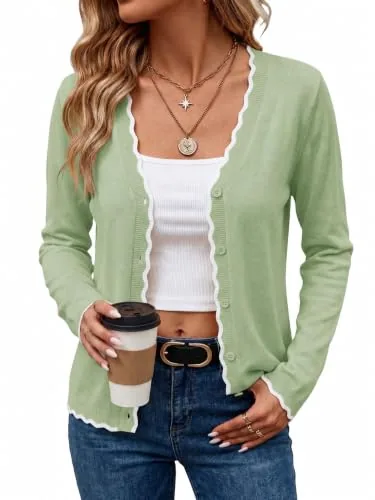
Womens Lightweight Cardigan Sweaters Casual Cardigans Light Green
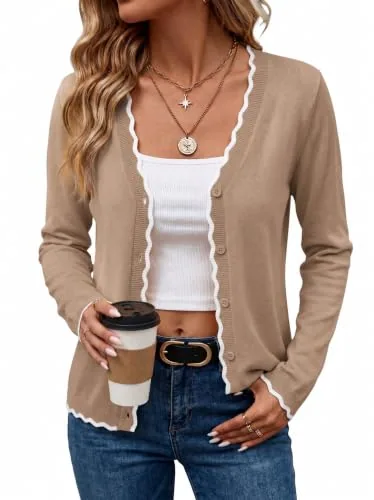
Lightweight V Neck Button Up Casual Cardigan Sweaters Light Camel
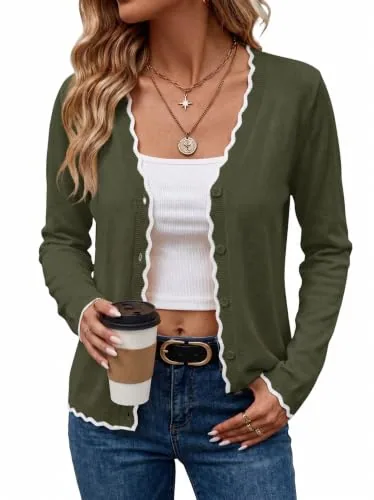
Women's Cardigans Long Sleeve Lightweight Cardigan Sweaters Green
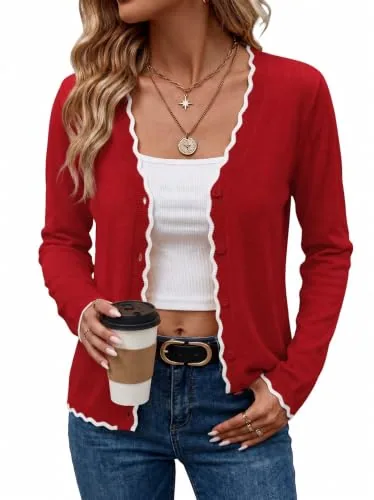
Fall Cardigan Sweater V Neck Button Down Lightweight Cardigans Red
A flag print is a design, not an origin claim
Every summer the same question arrives. A shirt with stars and stripes on the front: does that mean it was made in the United States?
No, and the two things are governed separately. A print is artwork. An origin claim is a statement about manufacture, and the Commission treats a false one as a law enforcement matter.
“The FTC Act gives the Commission the power to bring law enforcement actions against false or misleading claims that a product is of U.S. origin”
The standard for an unqualified Made in USA claim is that a product be all or virtually all made in the United States, and since the labelling rule took effect a marketer using that claim wrongly on a label faces civil penalties. Nothing about a flag on the front of a shirt engages any of that.
So read the two separately. The print on the front tells you what the shirt looks like on the Fourth. The label in the seam tells you where it came from. Both are honest, and only one of them is a claim. Our TCOT patriotic prints shelf carries the artwork and nothing more.
Hang tags say less than labels, on purpose
Since 2014 a hang tag has been allowed to name a fibre or a trademark without giving the full fibre content, as long as it says plainly that there is more to know. The wording the Commission suggests is direct: this tag does not disclose the product's full fibre content, or see label for the product's full fibre content.
That is a sensible rule and it has a consequence for shoppers. The tag on the front of a garment is allowed to be a summary. The label in the seam is the document.
If a tag names one fibre in large type and the seam label lists three, nobody has done anything wrong. You have simply read the advertisement rather than the specification.
Who is responsible for the product
The third required line names the manufacturer or the business responsible for marketing or handling the item. On most garments it appears as a registered identification number rather than a name. That is where a code like RN 123456 comes from.
That number is not decoration and it is not a serial number for your garment. It identifies the company that stands behind the product, and it is searchable in the Commission's own database. If a garment turns out to be a problem, the number is where the trail starts.
A garment with no responsible party named at all is a garment with nobody at the end of the chain. That is worth noticing even when everything else on the label reads well.
What the wash symbols are actually saying
Symbols and words carry the same weight, and the rule allows either. Where a label uses symbols, the ones that matter most are the tub, the triangle and the iron.
| Symbol | What it means | What it implies | Where it bites |
|---|---|---|---|
| Tub with a number | Machine wash at that temperature in Celsius | The dye and the fibre were tested at that heat | Hotter than the number risks colour and shrinkage |
| Tub with a hand | Hand wash only | Something in the construction fails in a drum | Usually the trim rather than the fabric |
| Triangle with a cross | Do not bleach | Colour or fibre is bleach sensitive | Ordinary stain removers often contain it |
| Square with a circle crossed | Do not tumble dry | Heat shrinks or distorts this piece | The most ignored line, and the most expensive |
The do-not-tumble-dry line is the one people override most often and regret most reliably. A cotton knit dried hot comes back a size smaller in the body and the same size in the sleeves, which is a fit nobody wants.
A useful habit: read the drying line before the washing line. Washing rarely destroys a garment on its own. Drying does.
Reading a label in thirty seconds
This is the order we use when a sample arrives here, and it works just as well in a changing room.
- Read the fibre line first and read it in order. The first fibre decides how the garment behaves.
- Look for spandex. Any percentage at all changes how a piece recovers after a day of wear.
- Find the care line and note the temperature. A cold wash on a knit is a signal about the dye as much as the fibre.
- Check whether the care line carries a warning rather than an instruction. Warnings mark the failure somebody found.
- Read the origin last. It answers a different question from the other three, and it answers only that one.
Thirty seconds, five lines, and most of what you need before a garment goes in a basket.
Labels on secondhand and resold clothes
A resale advertisement has no obligation to reproduce the label, and most do not. The photograph shows the front of the garment and the description repeats whatever the previous owner remembers, which is usually the brand and the size.
So ask for the label. A photograph of the side seam answers fibre, care and origin in one image, and somebody who cannot produce it is telling you something about how carefully the garment was kept.
Where somebody has cut the label out, treat the garment as unknown rather than as the thing the advertisement claims. Cut labels are usually about comfort at the neck rather than deceit, but the information has still gone, and with it the ability to wash the thing safely.
The same holds for a garment that has been dyed, cropped or altered after it left the maker. The label describes what was made, not what somebody did afterwards.
What we print, and what we leave off
TCOT pieces carry the fibre content, the origin, the care instruction and the responsible party, because that is what the rules require and because those four lines are the ones that stay true.
What we leave off is any word we cannot support. We do not print waterproof on a shell that is water resistant. We do not print an origin claim we have not been given. Where a maker states a fibre or a treatment, we pass on their wording rather than improving it.
The counterpart to this guide is the one about layers: what a coated shell actually does in weather, and where the honest edge of it is. That is in layers that earn their place, and the sizing side of the same question is in finding your size.
The rules above are public and short. If a garment matters enough to check, the two Commission pages linked at the foot of this guide will tell you more in ten minutes than any brand's own page, including ours.