 TCOT
TCOT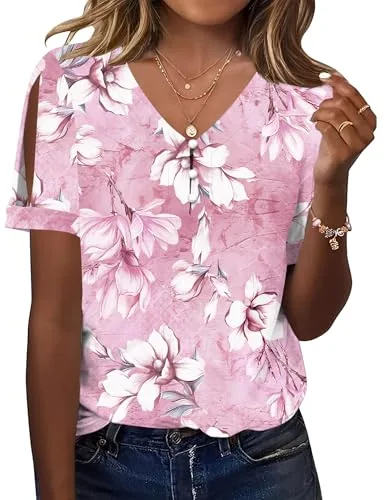
V Neck Shirts for Women Short Sleeve Tops Cold Shoulder Blouses
Size S
$13.194.2 out of 5 · 449 ratings

Size and fit
Sizes in the range run S to 3XL. The table below is counted from the pieces on sale today, so it shows what is actually available in each size rather than what a size chart says exists.
| Size | Pieces on the shelf | Shelves it appears on | Starts at |
|---|---|---|---|
| S | 167 | 7 | $8.79 |
| M | 61 | 7 | $9.99 |
| L | 75 | 7 | $9.49 |
| XL | 64 | 7 | $9.49 |
| XXL | 44 | 7 | $9.49 |
| 3XL | 24 | 5 | $9.49 |
Between two sizes, take the larger one in knitwear and the smaller one in shells. A cardigan that is roomy reads as a cardigan. A shell that is roomy reads as a borrowed coat.
Find the top you like most, lay it flat and measure four things: the chest across the front, the body length from the back neck, the sleeve from the shoulder seam, and the shoulder width seam to seam. Write them down once, then compare a garment with a garment from then on.
In knitwear take the larger size, because a cardigan wants room. In shells take the smaller one, because a shell already carries room for what goes underneath. In a button front, fit the chest and accept the rest.
We draft the plus sizes on their own pattern block rather than scaling them up from a small. Body width and length grow, shoulder width grows much less, and the armhole grows more than either. That is why a shoulder seam still sits on the shoulder.
Start here
Relaxed bodies and curved hems, which are the most forgiving pieces on a first order.